Our Story

A Podcast About Games Worth Talking About
Low Five Gaming is a monthly video game podcast hosted by brothers Alex and Luke. Each episode centers on a single game — what it is, what it was like to play it, whether it holds up, whether it mattered. Then we talk about what else we’ve been playing. That’s the format. Simple on paper. Better in practice.
We’re not a news show. We don’t chase release calendars or answer to shareholders — just each other. We do land on a rating and a recommendation at the end of every game discussion, but it comes out of the conversation rather than showing up as a number on a rubric. We're two guys who grew up playing games together and never really stopped having opinions about them. This is what happens when you finally act on that.
How This Started
Officially: we launched on January 1st, 2022, dropping five episodes at once after several months of recording, finding our footing, and learning how to actually podcast. Unofficially: it started a lot earlier than that.
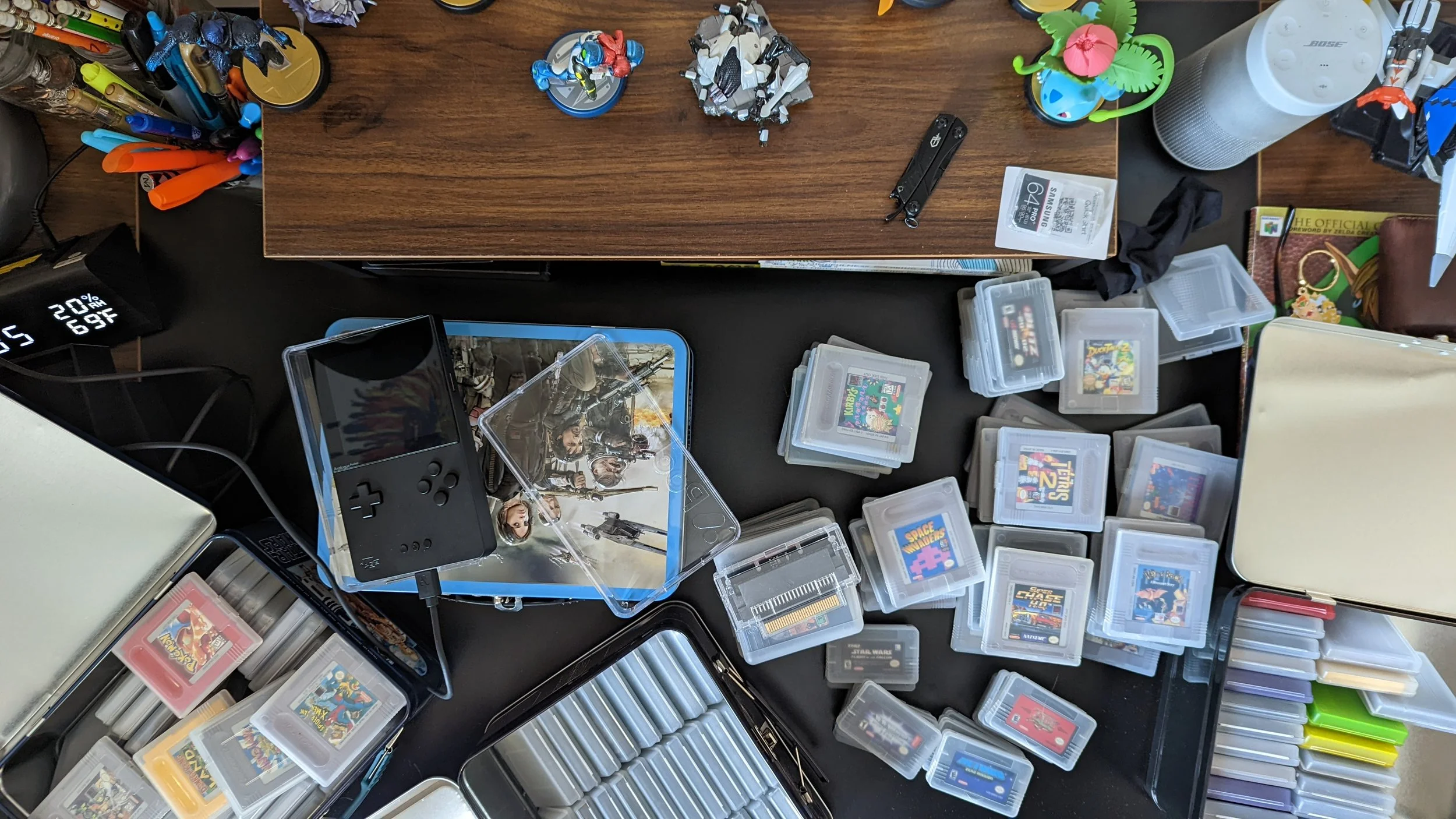
Growing up, the household gaming collection came in gradually. A hand-me-down Game Boy. Then a Sega Genesis and an NES, gifted by a neighbor’s family — though the NES went back to its original owner, because apparently that was the deal. The Genesis stayed, and that was enough. For a while, the real gaming happened at friends’ houses. Then, somewhere around his 12th or 13th birthday, Alex went in with his parents on a used Nintendo 64 from FuncoLand. That was the beginning of the end, in the best possible way. Luke, as the younger brother, was the direct beneficiary.
The idea for the podcast came from listening to another gaming show — one Luke had recommended, that they both genuinely respected — and thinking: we could do something like this. We have opinions. We have chemistry. Alex had the Adobe Creative Suite for work already, and the infrastructure to actually produce something. So they started recording.
The first official episode covered Prince of Persia — the Jordan Mechner 1989 release — because it was a game they’d had as kids on the family PC, and it felt like the right place to start. (There is also a secret pilot episode, a raw and very green attempt at covering Super Metroid, that does not officially exist. The recording was rough enough that it prompted Alex to buy proper microphones. Make of that what you will.)
Over 50 episodes later, the show has found a modest but genuinely passionate audience — and, maybe more unexpectedly, a whole community of like-minded independent creators making great video game content. That part has been one of the better surprises.
Why We Do This
Video games got treated as a lesser medium for a long time. Not real art. Not worth serious conversation. We think that’s wrong, and the culture has largely caught up — but a lot of gaming content still isn’t made with adults in mind. It’s fast, reactive, built for the algorithm. That’s fine. It’s just not what we wanted to listen to, and it’s not what we set out to make.
The goal is to talk about games the way you’d talk about a film you loved or a book that stuck with you. What did it feel like? What was it actually about? Why did it work, or why didn’t it? We care about the design, the art, the community that forms around a game, and the way certain titles just… lodge themselves in your memory. That’s the conversation we’re trying to have.
One listener described it as being stoned to the bone while your friends are deep in a great conversation — you just let it wash over you. You're the third homie who doesn't have to say anything. We loved that. The Discord is there for when you do want to jump in.
The Hosts
Alex Stahlmann
Alex is the co-host, producer, and the one who built the outline Luke isn’t going to follow. He works in creative media and marketing, which shapes the storytelling instincts and production quality behind the show. His play style leans toward exploration and completionism — he gets lost in side content, thinks too hard about game design, and will absolutely derail a conversation to ask why a mechanic works. He’s a dad, which has added a layer of philosophical weight to the question of what’s worth playing next.
Luke Stahlmann
Luke is the co-host, a middle school social studies teacher, and a reliable source of takes that sound wrong until they don't. He's the father of twins and — despite what his chaos agent reputation might suggest — probably the deeper student of the two when it comes to how games actually work. He plays with genuine intention, notices things Alex glosses over, and will tell you exactly what he thinks about a game's inventory system whether you asked or not. He’s a sweat. He's also the mind behind the Low Five Education Project (LFEd), an academic advocacy project making the case for video games in the classroom, rooted in his own experience as a teacher and a lifelong gamer.
What We Cover
A little bit of everything, but there are patterns. We’re Zelda people. We have a genuine soft spot for Metroidvanias, indie games, retro titles, and city builders. We’re also interested in games being made today for older platforms — there’s something genuinely exciting about new Game Boy releases in 2026. We tend to avoid games that are purely competitive or live-service-driven — not out of snobbery, just because they’re harder to have an interesting conversation about.
Come Find Us
New episodes drop monthly. Low Five Gaming is available on Apple Podcasts, Spotify, Pocket Casts, and wherever you listen. Probably. If not, let us know.
Beyond the main feed, the project includes a growing blog, short-form video series (PocketPix and STRTSCRN), regular posts on Instagram, YouTube, and Bluesky, and a Discord community where listeners play along and join the conversation between episodes. Occasional offshoots — Low Five Friends (LFF) and Low Five Top Five (LFTF) — round out the feed when the mood strikes.
Come hang out.