Fishbowl Review
Grief Doesn't Have a Meter
Fishbowl is a game about a young woman living alone, grieving her grandmother, and trying to get through the month — not exactly the premise that sends Alex of Low Five Gaming reaching for his Steam Deck. He played it anyway, ahead of the April 2nd launch, and somewhere in the daily loop of brushing Alo’s teeth and doing her dishes and keeping her mood meter climbing, the game made its case.
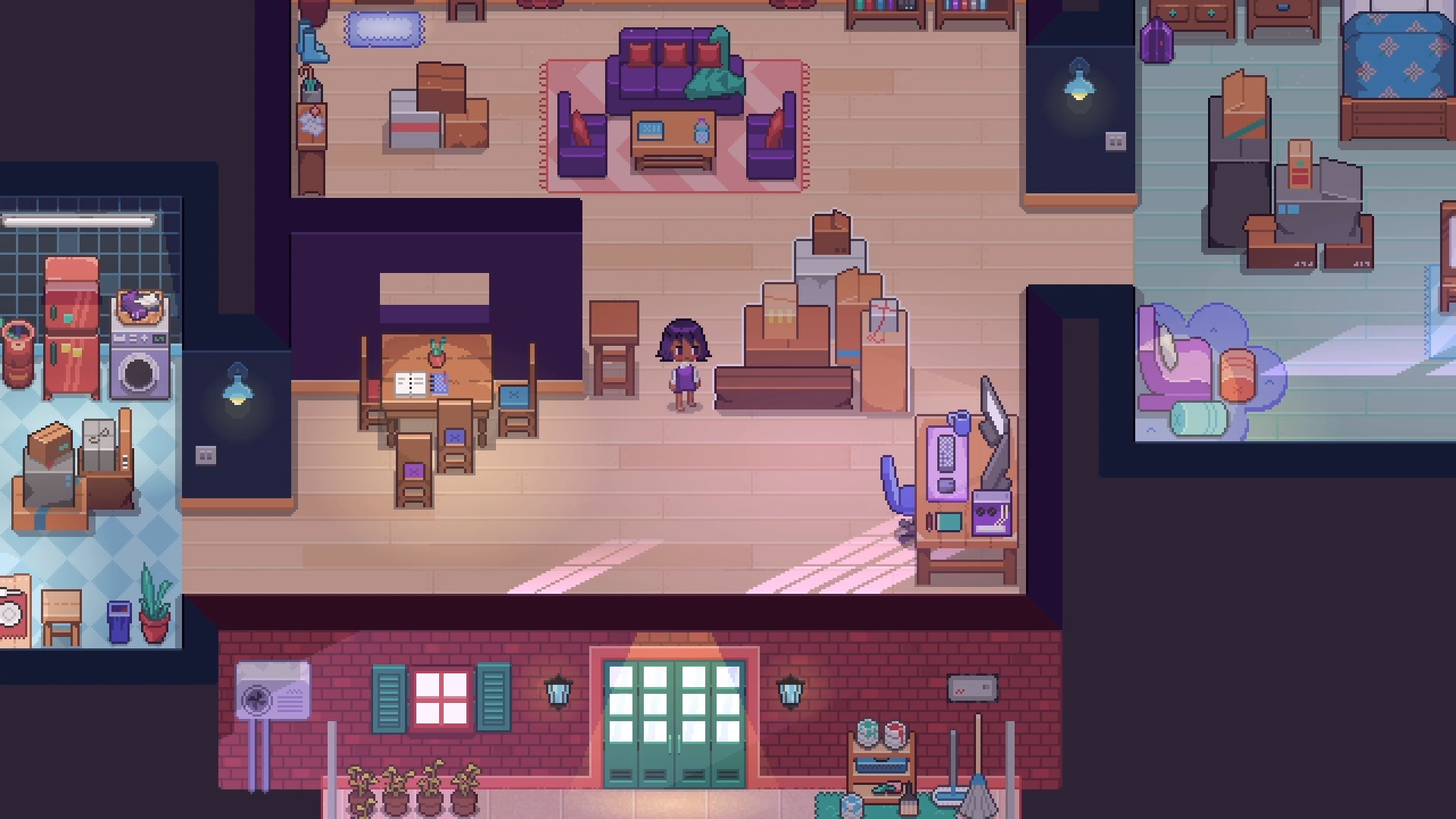
Image courtesy of imissmyfriends.studio
I don't typically go out of my way to play a game like Fishbowl. But I've learned that when they find me anyway, I'm usually glad they did. I got sent a review key and the timing lined up — I was between games, the embargo window was tight, and somewhere in the first hour I stopped thinking about what I'd normally be playing and started paying attention to what this one was actually doing. That happens less often than you'd think.
Fishbowl is a narrative-driven indie from imissmyfriends.studio, a two-person team based in Goa, India, published under Wholesome Games Presents. It launches April 2nd on Steam and PlayStation 5, runs somewhere in the 10-13 hour range, and follows Alo — early 20s, new city, new job, living alone while carrying a loss she hasn't fully processed yet. The surface read is cozy: hand-drawn pixel art, lo-fi soundtrack, slice-of-life pacing. What it actually is runs a little deeper than that.
The interaction design kept reminding me of old point-and-click adventure games — King's Quest specifically, that instinct to click on everything in the room just to see what happens. Fishbowl translates that into small minigames attached to almost every object you can interact with. None of them are complicated. They're just present, tactile, enough to make you feel like you're actually in the space rather than reading about it.
Each day resets with a loose set of things you could do. Brush your teeth. Shower. Make coffee. Eat something. Do the dishes. Walk across the apartment, start your work, maybe unpack one of the boxes that showed up from your grandmother's house. You don't have to do any of it. The game doesn't make you. But I did all of it, every day, roughly in the same order — textbook Virgo, building a routine, keeping Alo's mood meter climbing. It felt good. It felt like I had a handle on things.
For a while, that was enough.
When the Game Stops Letting You Win
Even when everything is locked in and the meter is full, something starts coming through anyway. The screen glitches. The audio cuts out and comes back wrong. A dark, shapeless presence starts appearing in the margins of Alo's memories — not a character exactly, more like a stain at the edge of the frame. If you've played Celeste, you'll recognize the idea immediately: something internal made visible. It doesn't announce itself. It just keeps showing up, and it doesn't much care how well you've been managing the routine.
I kept doing everything right and it kept coming back. The game was making a point.
There's a conversation mid-way through with Alo's boss about a set of plants on the porch — her grandmother's plants, ones she'd let die. She stopped watering them at some point, then started again, and they came back. The game isn't subtle about the analogy. It says it plainly: you have to water yourself too. On paper that sounds like it would land with a thud, but by the time you get there, you've already been living the metaphor for hours through systems rather than dialogue. The explicit version doesn't feel like a lesson. It feels like confirmation.
What the game quietly exposed in me was a shift I didn't notice happening. Early on I was brushing Alo's teeth because it felt like the right thing to do. Later, I stopped — not because I forgot, but because the meter was maxed and the reward was gone. The system was satisfied. That transition, from care as habit to care as optimization, is where Fishbowl gets genuinely uncomfortable. Because the game is telling you one thing and the system is allowing another, and the gap between those two is the whole argument.
The story underneath all of this unfolds slowly, mostly through phone calls and the memories that surface when Alo unpacks her grandmother's boxes — one a day, each one pulling something up from her childhood. This piece publishes the day the embargo lifts, a few days ahead of the April 2nd launch, so I'm not going to get into specifics. What I'll say is that it's a story about three people across three generations, and that the most interesting thread isn't necessarily the most obvious one. It lands where it needs to. The resolution doesn't try to overwhelm you — it just settles, which is exactly the right call for everything this game has been building toward.
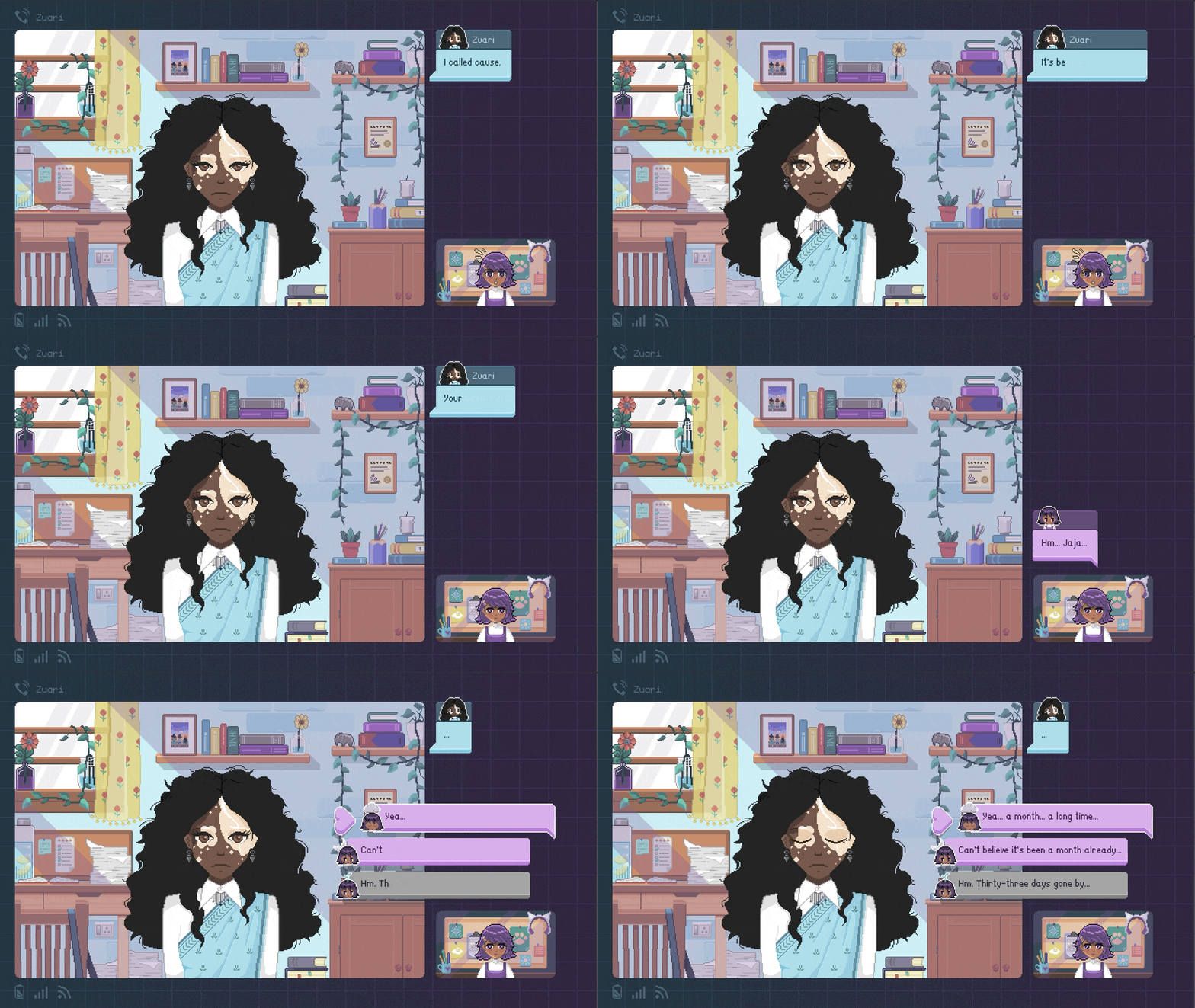
Gif courtesy of imissmyfriends.studio
Final Take
The back half drags a little. I rolled credits at just under ten hours and think it probably lands tighter at eight — the routine stops evolving and you start to feel the repetition working against you rather than for you. There were also a handful of crashes during my playthrough, nothing that cost me much progress thanks to forgiving autosaves, but enough to be worth mentioning.
The crashes mentioned above were reported to imissmyfriends.studio prior to launch. They were able to recreate and resolve the bug in the day one build.
None of that changes the recommendation. Fishbowl is doing something most games don't bother attempting — using the actual structure of a game, the meters and the loops and the daily resets, to say something true about depression and grief and the quiet, unsexy work of maintaining yourself through both. It doesn't always earn every hour it asks for. But it earns the experience.
The game offers different paths depending on the choices you make, and I played one of them. By the end I was already turning over what a different playthrough might look like — not because I felt like I missed something, but because the game made me curious about versions of Alo I hadn't seen yet. That's a better thing to leave a player with than a branching flowchart.
At ten dollars, I was thinking about who to send it to before I even hit credits.
At the end of every single day in Fishbowl, the same message appears. Doesn't matter how the day went or how well you played it. Same words, every time. I won't say what it is. But somewhere around the third week of Alo's month, it stopped feeling like a design choice and started feeling like the reason the game exists.
4 out of 5 watered plants.
A video essay on Fishbowl is now live (see below). Join our Discord to keep up with what we’re making next.
Fishbowl launched April 2, 2026 on Steam and PlayStation 5. Reviewed on PC via Steam key provided by Wholesome Games.
Low Five Gaming is a Studio Low Five Production.
More from Low Five Gaming
If Fishbowl's blend of quiet storytelling and emotional weight landed for you, these are worth your time.
Navigating Time and Mystery in The Forgotten City — another narrative indie that uses its mechanics to tell a better story than most games bother trying to.
What is the Playdate? — on small teams building personal, deliberate things. The same spirit that made Fishbowl exists here.
What Counts as a Holiday Game? — on playing games for feeling rather than function. Fishbowl lives in that space.