Ep. 049: Super Mario Galaxy
Nintendo Showing Off, Nearly Two Decades Later
Super Mario Galaxy turns 18 this November, which means it is now old enough to vote, and it still does things with a camera that most developers haven't figured out how to attempt. The game has been canonical for so long — a 97 on Metacritic, a fixture on every serious list of the best games ever made — that arriving at it fresh requires a particular kind of willful ignorance, the sort that Alex and Luke have made something of a house specialty on Low Five Gaming. They came in on different hardware, with different baselines, and landed in the same place on the rating scale while describing two noticeably different experiences getting there. That gap is worth paying attention to.
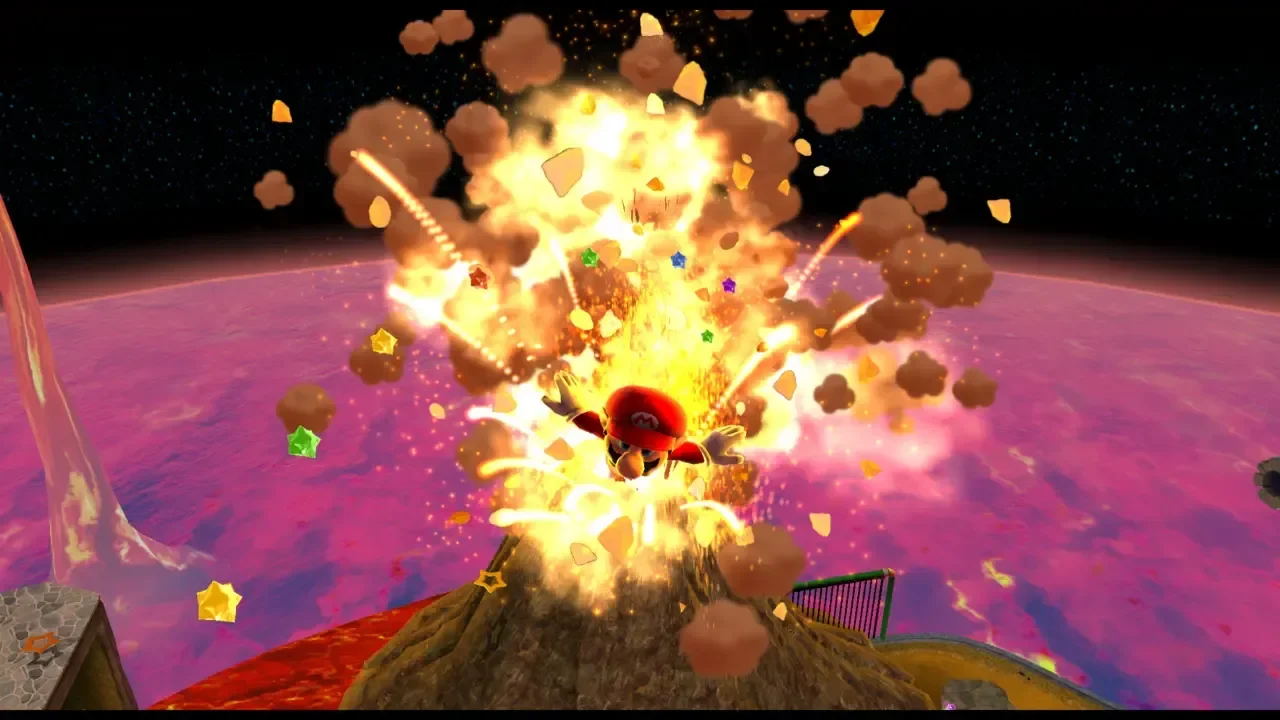
There's a moment early in Super Mario Galaxy where Mario lands on a tiny spherical planet, gravity locks to its surface, and the camera swings around to follow him as he runs the full circumference of a world the size of a living room. It's a simple idea, and it's completely disorienting, and it's immediately obvious that nobody else would have done it this way. That moment is the whole game in miniature: a design team using the constraints of 3D space as a toy rather than a problem. Ep. 049 marks the podcast's entry into year four, and there may not be a more fitting game to kick off the stretch run.
Super Mario Galaxy was developed and published by Nintendo for the Wii, releasing in North America on November 12th, 2007. It holds a Metacritic score of 97, placing it in all-timer territory — Alex notes it sat among the highest-rated games on Metacritic in its first months of release. HowLongToBeat clocks the main story at around 19 hours, though full completion across both playthroughs pushes significantly further. Alex played on an actual Wii in his basement, pointer controls and all. Luke played via Super Mario 3D All-Stars on Switch with Joy-Con motion, though notably never attempted handheld mode — a choice both hosts endorse after Alex tried and immediately abandoned the first couple of planets.
The origin of Galaxy's design is worth knowing: according to Alex's research, the galaxy conceit wasn't a story decision that shaped the levels — it was a design decision that generated the story. Nintendo wanted to push 3D platforming forward, and their answer to the perennial camera problem of the genre was to give Mario tiny planets with their own gravity. The camera follows naturally as you orbit a sphere, wrap around a capsule, or run across a donut-shaped world. What needed a story to justify it became a game about traversing the cosmos, and Rosalina's Comet Observatory emerged from that logic. The solution to a technical challenge became the entire personality of the game.
The music gets its own moment, and deserves it. Galaxy was the first Mario game to use a full orchestral score, which came with its own origin story: lead composer Mahito Yokota spent months trying different directions — Latin pop among them — before Miyamoto redirected with a note that has become something of a design philosophy: Mario isn't cute, Mario is cool. The orchestra landed, and the result is a soundtrack that feels genuinely grand in a way that suits both the space setting and the scale of what Nintendo was attempting. Luke called it out specifically as a reason he made sure he wasn't doing anything else while playing. The sound effects hit too — every star collect prompts a synchronized celebration in Luke's household, his twin boys trained to shout along on cue.
Where the two hosts land on Galaxy is complementary but not identical. Alex keeps returning to the word "fantastical" — the game commits fully to its own logic, from Bee Suit Mario to the planetary set pieces to the strange little life that populates each galaxy. He'd put it on any serious list of the best 3D Mario games, comparing his preference for Galaxy over its sequel the same way he'd prefer Breath of the Wild over Tears of the Kingdom: the original did it first, and the DNA runs deep. Luke, who played Odyssey before Galaxy and came in with that baseline, found himself respecting the game more than being absorbed by it — a 3D platformer fan would find a near-perfect specimen here, and the variety of level design, the one-off experimental side planets, the sheer range of what the game pulls off, is impossible to dismiss. Both give it five out of five Star Points, with some acknowledgment that the mandatory three-hit boss structure can feel mechanical and that life counts reset on a clean power-down, which Alex discovered mid-playthrough in a way that was annoying but never catastrophic. The rating scale is borrowed from the in-game collection mechanic and carefully distinguished from the Diablo episode's Pentagon Tips — different star, different points.
Their 3D Mario rankings, for the record: Luke's four-game ranking goes Galaxy first, Odyssey second, 64 third, Sunshine last — though he notes 64 is untouchable as a cultural artifact, and Odyssey hit at a perfect moment in his life in a way that sticks. Alex couldn't commit to a clean Mount Rushmore across all Mario games, but positioned Galaxy firmly near the top. Super Mario Wonder — which Alex had recently picked up on sale — came up as a companion point, the argument being that Nintendo's capacity for playful invention didn't stop in 2007 and hasn't calcified since.
Sidequestin’: On the gaming side, Alex has been playing Neva — an action platformer from the developers of Gris, carrying that game's art and emotional sensibility into combat — and wants to return to it seriously, possibly for a future episode. He also put a couple hours into 3D Dot Game Heroes on PS3, a top-down Zelda-like with a distinctive voxel block art style, recommended via Pixel Project Radio, and hopes to finish it at some point. The Rogue Prince of Persia got another mention — Alex has been capturing gameplay for potential content — and Fishbowl, an upcoming indie game Alex received a Steam key to review, got a brief teaser with an embargo date of the thirtieth. Luke has been parenting through the side quests, successfully introducing his boys to Galaxy as a shared experience and fielding their ongoing demand for more Bowser.
This episode is unofficially brought to you in part by vinyl records, with appropriate weight — both brothers are collectors, the pod was recorded the morning of a planned record store run, and Alex's son Elton has already been caught putting on a meditation record as a bedtime stall tactic. Alex's collection drifted toward retro games when he couldn't fund both hobbies; Luke's has been active all along and recently reinvigorated. Alex also shouted out the Break Even Beats Kollective — a group of friends who gather to spin records, with an upcoming session to pay respects to a friend who passed.
Super Mario Galaxy is available on the original Wii, and via Super Mario 3D All-Stars on Nintendo Switch. Find the full episode wherever you pod, and come celebrate star collections in the Discord.
APPLE PODCASTS // AUDIBLE // GOOGLE PODCASTS // POCKET CASTS // PODBEAN // PODCAST ADDICT // SPOTIFY // STITCHER
AND EVERYWHERE YOU LISTEN TO PODCASTS!
Low Five Gaming is a Studio Low Five Production.
More Low Five Gaming Episodes You Might Like
If Super Mario Galaxy stood out for its inventive use of space and constant mechanical twists, these episodes explore games that build identity through movement, design experimentation, and how you navigate their worlds.
The Legend of Zelda: Tears of the Kingdom — Like Galaxy, TOTK is built around a central mechanical idea and trusts players to experiment within it, turning movement and discovery into the core of the experience.
Hollow Knight and Silksong — A very different tone, but Hollow Knight shares Galaxy’s focus on traversal as identity, where how you move through the world defines the experience.
Gris — While more meditative, Gris echoes Galaxy’s commitment to visual creativity and using level design to constantly introduce new ideas and perspectives.