Ep. 039: The Legend of Zelda: Echoes of Wisdom
Finally Her Turn — And She Earned It
The Legend of Zelda: Echoes of Wisdom came out in September 2024, and the conversation around it arrived in two distinct waves: the immediate noise about Zelda finally headlining her own game, and the quieter consensus that followed once people actually played it. Alex and Luke came to it somewhere in that second wave, both deep enough in to have formed strong opinions and not quite deep enough to have rolled credits. They gave it five out of five anyway, which tells you something about the kind of game this is — and raises a question about what, exactly, Nintendo built when they finally handed Zelda the wand.
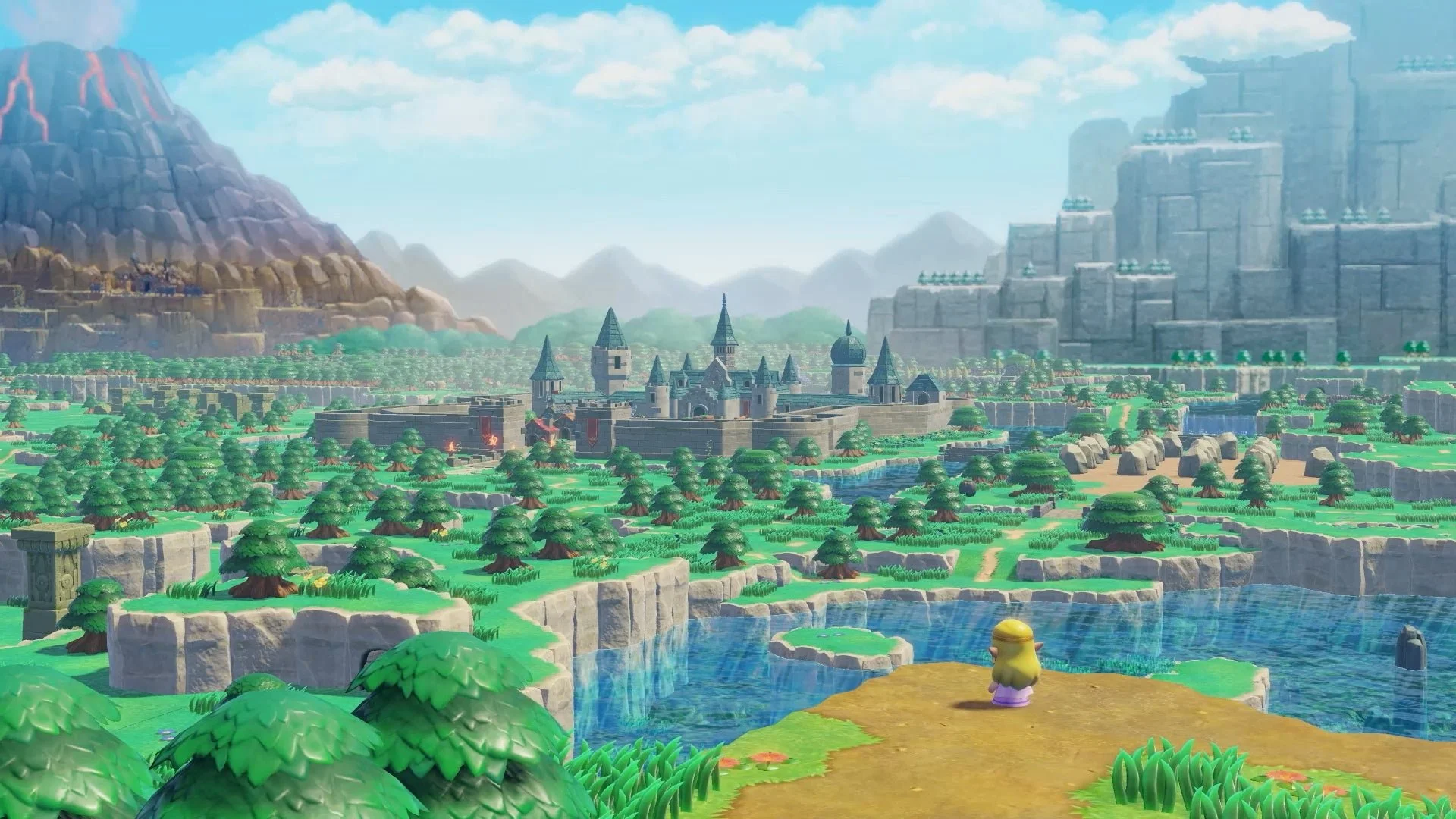
For as long as there's been a Legend of Zelda, there's been a conversation about why Zelda never gets to be the protagonist of her own game. Echoes of Wisdom doesn't just answer that question — it answers it in a way that makes the long wait feel almost like a setup. Nintendo gave her a wand instead of a sword, built a system around creativity and summoning rather than combat, and in doing so made a game that feels genuinely different from Link's toolkit while still reading as unmistakably Zelda. The result is what both hosts are calling, even mid-playthrough, one of the best games in the series.
The Legend of Zelda: Echoes of Wisdom was developed by Nintendo and Grezzo — the same studio behind the 2019 Link's Awakening remake — and released for Nintendo Switch on September 26th, 2024. It holds a Metacritic score of 86, with HowLongToBeat clocking the main story at roughly 25 to 30 hours. Both Alex and Luke played on Switch. Neither had rolled credits at the time of recording, sitting around 20 to 25 hours in. Both give it five out of five Tri Rod Triangles anyway. Some games earn their rating before they're over.
The premise is vintage Nintendo misdirection: the game opens with Link, fully leveled, descending into a boss fight against Ganon. Then Zelda watches him get sealed in a rift, and you take over from there. She's got the Tri Rod — a wand that lets her copy enemy echoes and summon them at will, limited by a triangle energy meter that expands as you progress. The echo system is the entire game in miniature: collect an enemy's essence by defeating it, deploy it in combat or puzzles, mix and match to find combinations nobody told you about. Luke went one direction, Tyler from the Discord went another, and they solved the same puzzle three different ways using completely different echo sets. That's the point. The system doesn't have a right answer; it has a sandbox, and the sandbox rewards experimentation over efficiency.
Zelda also has a swordfighter mode that burns a separate energy meter and turns combat into something closer to traditional Link play, which burns out fast enough to stay situational. She can rest on a summoned bed to restore hearts — a mechanic both hosts discovered embarrassingly late, then used constantly. The beeping low-heart sound effect that has been driving Zelda players to the brink of madness since the NES era is no longer a crisis; you summon a bed, lie down, get up, continue being violent. Alex calls this the resolution of his greatest Zelda pet peeve of all time. He is not wrong.
What the episode keeps returning to is the game's position in the larger series arc. The 2D and 3D Zelda lineages ran parallel for decades — handhelds on one track, consoles on the other — until the 3DS died and the Switch collapsed them into one platform. After Breath of the Wild and Tears of the Kingdom reset what a 3D Zelda could be, the question became whether 2D Zelda would follow or calcify. Echoes of Wisdom is the answer: the same creative leap that Breath of the Wild made for three dimensions, made for two. The map has that BotW texture of rewarding curiosity — odd shapes in the terrain that turn out to conceal something worthwhile, chunks of the world that open up as fog-of-war clears into hand-drawn illustration. The Rifts, pocket dimensions that function like miniature platforming challenges, carry echoes of the Dark World, Tears' Depths, and even Toad Treasure Tracker. The dungeons are back in earnest — real, themed, structurally interesting dungeons with multi-phase bosses — which Luke positions as a meaningful correction after BotW and TotK's divine beasts. The fish boss with the targets on its belly and belly-flop water mechanics gets particular love in the Discord. The side-scrolling sections, borrowed from Link's Awakening's playbook, snap in and out of perspective so smoothly that it takes a beat to realize the entire echo system just translated laterally with no friction.
The gripes are minor but genuine. Stamp Guy — a character who serves as the map and collectible companion, functionally identical to Tingle in role and disposition — should simply be Tingle. Both hosts read the same article about the smoothie cooking system being a weirdly gendered choice for Zelda's food mechanics, sat with it for a minute, and concluded the critique landed. The smoothie interface is also just slow and clunky. Frame rate dips exist and are acknowledged; neither host finds them meaningful.
Five Tri Rod Triangles apiece. Luke, who describes himself as more 3D Zelda than 2D by background and inclination, calls it exactly what he wanted — a bite-sized portal for anyone who found Breath of the Wild overstimulating and wanted the wonder without the sprawl. Alex, the series' 2D adherent who speed-ran Link's Awakening as a kid before he knew that was a thing, calls it a phenomenal Zelda game with a real chance of landing somewhere meaningful once he rolls credits.
Sidequestin’: Alex has been deep in The Talos Principle for an upcoming guest spot on Pixel Project Radio — a 3D puzzler that made him genuinely motion sick before he found the accessibility settings, now back on track and provoking serious thoughts about consciousness and what it means to be human. He's also been watching The Starting Five on Netflix, which he describes as a warm window into NBA players' lives that gives the Timberwolves some national shine via Anthony Edwards. The CAT trade came up unprompted and was grieved at length. Alex also harvested an early haul of green habaneros ahead of a frost, is deep into homemade hot sauce production, and recently received Truff hot sauce as a birthday gift, which his wife Anna has been using with zero reverence for its price point. Luke has been battling his NCAA 25 dynasty addiction — now coaching the University of Minnesota as Coach Dukes III, poaching the best recruits out of Eden Prairie and Wisconsin specifically to destroy Wisconsin — and reports that Zelda has slowed but not stopped the habit. The major side quest this episode, though, was a D&D one-shot that Alex, Luke, and their friend Ace played with DM Mike: Alex played an archer dwarf named Alistair Shadowforge (the "Al" nickname still works; the Shadowforge comes from a German root meaning man of steel; he spent genuine prep time on this), Luke played a ranger dwarf, they spent longer in the tavern than Mike anticipated because they played too much Witcher and trusted no one, and the Karl-Anthony Towns trade was delivered by notification directly into the middle of the campaign. Both hosts emerged with newfound respect for the DM's job.
This episode is unofficially brought to you in part by the McDonald's Steak, Egg & Cheese Bagel — it's back, Luke has been waiting, the fried onions are load-bearing — and hot sauce, the community and the craft.
The Legend of Zelda: Echoes of Wisdom is available on Nintendo Switch. Find the full episode wherever you pod, and come share your most deranged echo builds in the Discord.
APPLE PODCASTS // AUDIBLE // GOOGLE PODCASTS // POCKET CASTS // PODBEAN // PODCAST ADDICT // SPOTIFY // STITCHER
AND EVERYWHERE YOU LISTEN TO PODCASTS!
Low Five Gaming is a Studio Low Five Production.
More Low Five Gaming Episodes You Might Like
If Echoes of Wisdom clicked for its sandbox-style problem solving and systems-driven design, these episodes explore games that reward experimentation, player creativity, and finding your own solution.
The Legend of Zelda: Tears of the Kingdom — The clearest parallel, TOTK builds around the same philosophy: give players a system and let them solve problems their own way.
The Talos Principle — A more structured puzzler, but Talos shares Echoes of Wisdom’s core idea that solutions aren’t handed to you — they’re discovered through experimentation and understanding the system.
Kirby 64: The Crystal Shards — A surprising overlap, Kirby 64’s copy-combination system taps into that same joy of mixing abilities and discovering what works through play.