Ep. 041: Against the Storm
Build it Up. Watch it Wash Away. Do it Again.
Against the Storm arrived quietly in late 2023 — a roguelike city-builder from a small Polish studio, published by Hooded Horse, carrying a 91 on Metacritic and almost no cultural footprint outside the strategy game niche that tends to discover these things first and tell nobody. It is not the kind of game Low Five Gaming usually covers, and that's exactly why Alex and Luke covered it. What they found was a game that actively resists the instinct to get comfortable — one that withholds the satisfaction that city-builders are supposed to provide, then replaces it with something harder to name and considerably more difficult to put down. Whether that trade-off lands the same way for both hosts is where things get interesting.
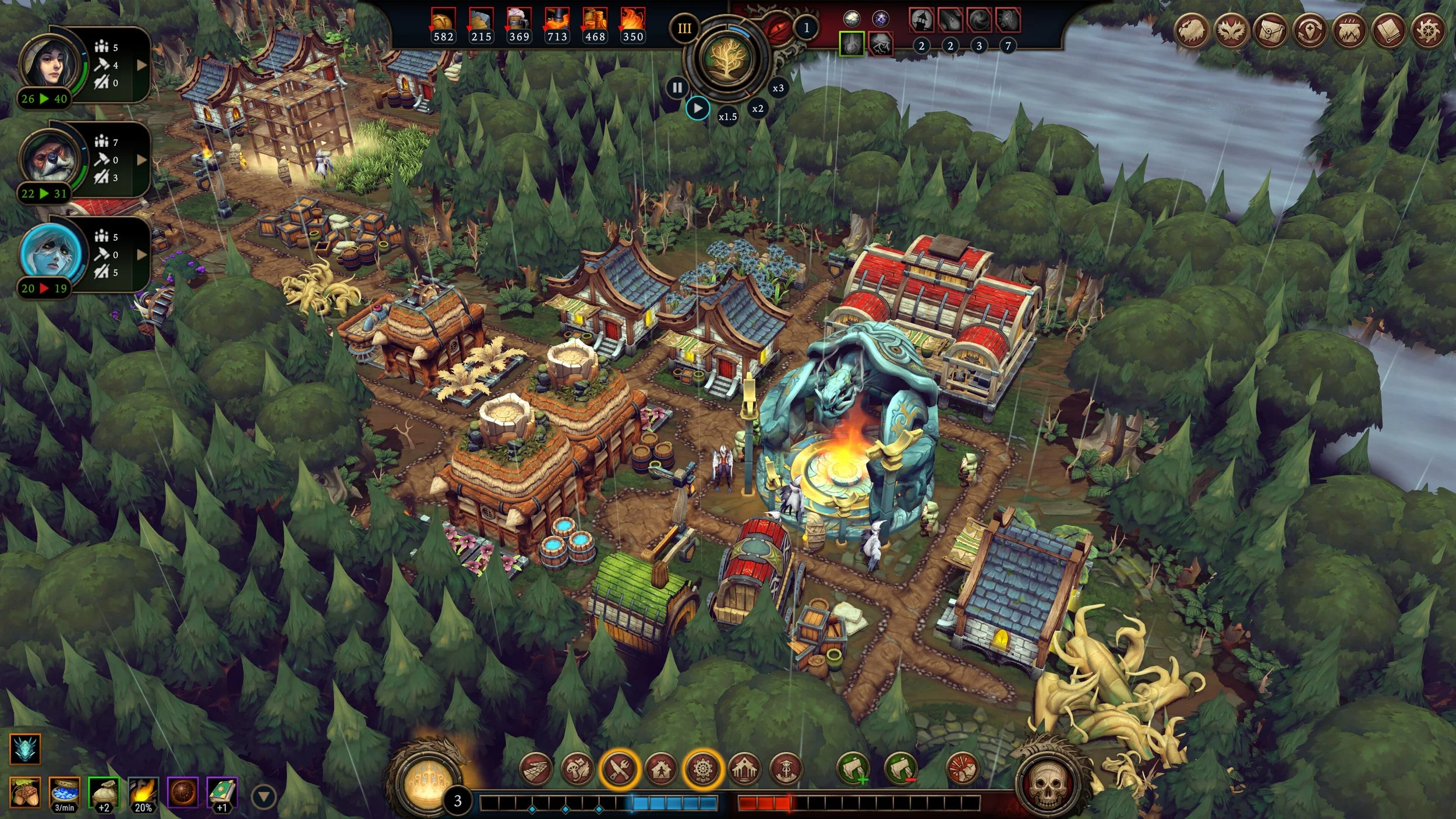
Most city builders let you sit in your creation. You zone your districts, manage your traffic, watch your population tick upward, and the whole point is the accumulation — the sprawling thing you've made that keeps existing. Against the Storm takes that feeling and cuts it off at the knees, on purpose, and it turns out that's the best thing that could have happened to the genre. You build something, you survive the rain, you bring back your spoils, and the storm erases it. Then you do it again, better, with new tools. It should feel like a loss. It feels like a game loop.
Against the Storm was developed by Eremite Games and published by Hooded Horse — a publisher with a track record of genuinely weird, genuinely good strategy games, including a Civilization 4 spiritual successor called Old World and a Soviet city-builder that may be the most niche recommendation ever made on this podcast. Against the Storm released in November 2023, holds a Metacritic score of 91, and clocks in at 36 hours for a main story completion per HowLongToBeat — though completionists can push north of 250. Luke put in around 30 hours, played almost exclusively on Steam Deck. Alex split between Steam Deck and PC and logged closer to 10 to 12, which he describes as barely scratching the surface.
The setup, lifted from the game's own description: the world is eternally ravaged by the Blightstorm. The only safe haven is the Smoldering City, ruled by the Scorched Queen. When the storm temporarily subsides, she sends her Viceroys out to establish settlements, gather supplies, and hold on until the storm comes back and wipes everything out. You are the Viceroy. Your settlers are humans, beavers, lizards, foxes, and harpies, each with different needs and preferences that your production chains have to accommodate. The tension is the point. There are three interlocking loops at work in every run: keeping your villagers alive and supplied through resource management and production chains; clearing the map through exploration, sending loggers into fog-shrouded pockets called glades that reveal new resources and new challenges; and managing "Impatience," a ticking clock that represents the Queen's tolerance for slow progress and will end your run if you let it run out. Survive, and you return to the overworld — a hex-tiled map that looks like Catan got a dark fantasy makeover — carrying back resources and unlocking upgrades to your keep that carry into the next expedition. Fail, same thing. The roguelike structure means the learning curve isn't punishing so much as it is gradual, and the upgrades mean even a failed run is progress.
What makes it stranger and more interesting than either half of its genre description suggests is how it handles depth. Alex spent roughly five hours before he started reading building descriptions, which is when things clicked: every resource has a production path, every building has priority settings, every run drops a selection of upgrade cards at timed intervals that you choose between based on what the map is actually giving you. Picking the card that matches your current biome and mission requirements over the theoretically stronger option is exactly the kind of decision the game rewards. Luke, deep enough in to encounter the blight system — a corruption mechanic tied to steam-powered efficiency upgrades that neither host has fully engaged with yet — described it as a game that keeps arriving with new layers right when you think you understand it. Alex said it gets his anxiety going. Luke said he wakes up from half-sleep thinking about production chains. Both mean it as a compliment.
The Steam Deck optimization is worth calling out specifically. Luke is particular about strategy games on handheld — mouse-dependent interfaces are the usual dealbreaker — but Against the Storm's trackpad support is tight enough that it works in bed without compromise. It was a genuine factor in his rating. Alex notes that the PC experience with a mouse is still better in absolute terms, but the gap is narrow enough that the portability wins. Luke gives it a full 5 out of 5 Category 5 Hurricanes. Alex lands at 4 — tempted toward 5 but docking for an update mid-run that booted him from a 45-minute settlement, even as he acknowledges the game let him keep all the rewards from that run. The only real criticisms either host can offer are things that are also, by admission, features: the learning curve is steep because the game is deep; the stress is real because the stakes are real; the complexity keeps escalating because there's more to discover.
Side Quests: Luke has been playing Ratchet & Clank: Rift Apart on Steam Deck — a wholesome, low-pressure action platformer that he can pick up and run through without thinking too hard, appreciating the series' signature mechanic of guns that upgrade through use, including a disco ball that makes enemies stop and dance while you mop them up. He's also deep in NCAA football headcanon storylines, which the pod has banned from discussion but which he managed to namecheck anyway. Alex bought NBA 2K25 after Black Friday, noting meaningful gameplay changes over 2K24 — nerfed three-point timing, and substantially improved player-specific motion capture that makes everyone on the court feel more distinct. He also picked up RoboCop: Rogue City on sale, a double-A first-person shooter with RPG progression that leans into Robocop's signature slow, heavy movement and has fans of the source material happy. He finally pulled the trigger on Cult of the Lamb for Switch at $20. And a storage expansion purchase for his Xbox Series X came bundled with a free month of Game Pass, which he used primarily to sample Indiana Jones and the Great Circle — strong voice acting, strong visuals, an Xbox win. He also fired up Diablo 1 on GOG, and credits the Main Quest Podcast's recent Diablo episode for the itch. Elden Ring is up next for Low Five Gaming — both hosts are finally going in.
This episode is unofficially brought to you in part by Jim Carrey's Grinch — a top-five Christmas movie, a misunderstood masterpiece of holiday cinema, and a film that Ron Howard directed and Jim Carrey has said he'd return to via motion capture because the makeup nearly destroyed him. Luke will fight anyone on this.
Against the Storm is available on PC via Steam and the Epic Games Store. Find the full episode wherever you pod, and come talk production chains in the Discord.
APPLE PODCASTS // AUDIBLE // GOOGLE PODCASTS // POCKET CASTS // PODBEAN // PODCAST ADDICT // SPOTIFY // STITCHER
AND EVERYWHERE YOU LISTEN TO PODCASTS!
Low Five Gaming is a Studio Low Five Production.
More Low Five Gaming Episodes You Might Like
If Against the Storm clicked for its layered systems and run-based structure, these episodes explore games built around repeatable loops, meaningful decisions, and progression that builds over time.
Hades — Like Against the Storm, Hades thrives on a roguelike loop where each run deepens your understanding and strengthens your future attempts.
Cult of the Lamb — A close structural match, Cult of the Lamb pairs run-based gameplay with management systems, balancing short-term survival with long-term growth.
Diablo IV — While not run-based in the same way, Diablo IV shares the same compulsion loop of optimization, loot, and incremental power gains that keep you coming back.